
In single-crystal growth furnaces, internal components must withstand prolonged exposure to high temperatures while maintaining structural stability throughout the production process. Support rods play an important role in holding and positioning furnace components, making their mechanical strength, thermal properties, and dimensional stability essential to reliable operation. Carbon-carbon (C/C) composite support rods have become an option for demanding furnace applications, offering a combination of lightweight construction, high mechanical strength, and resistance to thermal shock.
Operating Challenges for Support Rods in Single-Crystal Growth Furnaces
Support rods inside single-crystal growth furnaces are exposed to more than high temperatures. Depending on their position and function, they may also experience mechanical loads, temperature fluctuations, thermal cycling, and stresses caused by installation or connected components. Over time, these conditions can affect structural integrity, dimensional stability, and overall service life.
Selecting a suitable material requires more than checking its maximum temperature rating. Load requirements, furnace atmosphere, heating and cooling rates, component geometry, and mounting conditions all influence performance. A support rod designed for one furnace configuration may not be suitable for another, which is why material selection and structural design should be based on actual operating conditions.
Why Carbon-Carbon Composites Are Suitable for High-Temperature Support Applications
Carbon-carbon composites consist of carbon fibers reinforced within a carbon matrix. Their mechanical properties depend on fiber orientation, reinforcement structure, density, and manufacturing processes, allowing the material to be tailored to different structural requirements.
One of their main advantages is a high strength-to-weight ratio. Carbon-carbon composites can provide substantial mechanical strength without the weight of many conventional structural materials. In furnace assemblies, lower component weight can ease installation and reduce the load on connected structures, provided the rod is properly designed for its intended application.
Thermal stability is another reason C/C composites are used in high-temperature equipment. Under suitable operating conditions, they can retain useful mechanical properties in demanding thermal environments. Their resistance to thermal shock also makes them worth considering for applications involving repeated heating and cooling, where temperature gradients can create stress within a component.
Thermal expansion characteristics should also be taken into account. Dimensional changes during temperature variations can affect component positioning, clearances, and connections inside a furnace. Understanding these properties helps engineers determine whether a carbon-carbon support rod is suitable for the thermal conditions and structural requirements of a particular system.
How Carbon-Carbon Support Rods Contribute to Furnace Performance
Maintaining Structural Stability Under High Temperatures
Support rods must carry loads and keep internal components in their intended positions throughout furnace operation. A properly designed carbon-carbon support rod can provide the required mechanical support while maintaining structural integrity under demanding thermal conditions. Its performance depends on the composite structure, load direction, dimensions, and the quality of the finished component.
Supporting Consistent Thermal Conditions
The materials and geometry of furnace components can influence heat transfer within the hot zone. Carbon-carbon composites have thermal properties that vary with fiber architecture and direction, which may be considered when designing support structures for specific thermal-field arrangements.
Although support rod selection can contribute to overall furnace design, temperature uniformity is determined by the entire thermal system, including heaters, insulation, component layout, furnace geometry, and process control. Evaluating the support rod within this broader system helps avoid treating a single component as the sole factor affecting thermal performance.
Managing Mechanical Loads and Component Weight
A support rod's weight and mechanical strength both affect the surrounding assembly. Carbon-carbon composites offer the potential to reduce component weight while meeting load-bearing requirements, helping engineers manage structural loads and installation considerations. Actual benefits depend on the rod's dimensions, reinforcement design, connection method, and applied forces.
Improving Operational Reliability
Component stability is essential for equipment operating over extended production cycles. Properly specified support rods can help reduce unwanted movement, premature damage, and maintenance interruptions associated with component failure. Material selection, manufacturing consistency, installation accuracy, and operating conditions all contribute to long-term reliability.
Carbon-Carbon vs. Graphite Support Rods: Key Differences
Graphite is widely used in high-temperature equipment because of its established processing methods, machinability, and availability in different grades. Carbon-carbon composites offer a different structural approach by incorporating fiber reinforcement into a carbon matrix, making them suitable for applications where mechanical performance and component weight need to be considered together.
The key difference lies in their material structure. Graphite performance is influenced by grade, density, grain structure, and processing quality. Carbon-carbon composite performance also depends on fiber orientation, reinforcement architecture, and the interaction between fibers and matrix. These factors can give C/C components advantages in certain mechanical loading conditions, but the results vary with design and material specifications.
| Comparison Factor | Carbon-Carbon Support Rod | Graphite Support Rod |
|---|---|---|
| Material structure | Carbon fiber reinforced carbon matrix | Graphite-based material |
| Mechanical performance | Influenced by fiber orientation and composite design | Influenced by grade, density, grain structure, and processing |
| Weight | High strength-to-weight ratio potential | Varies by grade and component dimensions |
| Thermal shock resistance | Depends on composite architecture and processing | Depends on graphite grade and component design |
| Design flexibility | Reinforcement can be tailored to load requirements | Primarily determined by material properties and geometry |
| Application suitability | Demanding structural and thermal applications | Widely used in conventional high-temperature applications |
Replacing graphite with carbon-carbon should be evaluated on a case-by-case basis. Load conditions, temperature range, furnace atmosphere, component geometry, machining requirements, service life, and overall cost should all be considered before making a material change.
Manufacturing Quality and Its Impact on Carbon-Carbon Support Rod Performance
Fiber Architecture and Preform Preparation
The fiber preform forms the structural foundation of a carbon-carbon support rod. Fiber orientation, reinforcement distribution, and preform uniformity influence how the finished component responds to tensile, compressive, bending, and shear loads. The reinforcement structure should therefore be designed around the forces the rod is expected to withstand.
Densification Process
Densification helps reduce porosity and improve the integrity of the carbon matrix. Gas-phase infiltration and liquid-phase impregnation are commonly used approaches in C/C composite manufacturing. Process control during densification affects density, internal structure, and mechanical consistency, making it an important part of product quality.
High-Temperature Treatment
High-temperature treatment helps establish the required material characteristics and thermal performance. The treatment process must be matched to the material system and intended application to maintain consistent quality across production batches.
Precision Machining and Dimensional Control
Machining determines the final dimensions, surface finish, and connection details of the support rod. Length, diameter, straightness, and mounting tolerances can all affect installation and load distribution. Accurate machining is particularly important for replacement components, where the finished rod must fit existing furnace assemblies without unnecessary modification.
What Should Buyers Consider When Selecting a Carbon-Carbon Support Rod?
Choosing a carbon-carbon support rod for a single-crystal growth furnace starts with understanding the equipment and its operating conditions. Buyers should provide as much application information as possible to help manufacturers evaluate the appropriate material and design.
-
Operating temperature: Actual working temperature, exposure duration, and heating or cooling cycles.
-
Load requirements: Static and dynamic loads, bending forces, and load distribution.
-
Dimensions and tolerances: Rod length, diameter, straightness, connection details, and fitting requirements.
-
Mechanical properties: Relevant tensile, compressive, bending, and shear performance.
-
Furnace atmosphere: Gas environment and conditions that may affect material performance.
-
Installation requirements: Mounting structure, connection method, clearances, and assembly configuration.
-
Service life: Expected operating cycles, inspection requirements, and replacement intervals.
-
Customization: Whether the component needs to be manufactured according to drawings, samples, or equipment-specific specifications.
Mechanical property data should be reviewed in relation to the actual application rather than considered in isolation. Buyers should also confirm testing methods, measurement conditions, and whether reported values are typical or guaranteed specifications. This helps establish realistic acceptance criteria and avoid discrepancies between material data and actual operating requirements.
Dehong's Carbon-Carbon Support Rod Manufacturing and Customization
For furnace component manufacturers and crystal-growth equipment operators, customized carbon-carbon components can be necessary when standard sizes or material specifications do not meet equipment requirements. Zhejiang Dehong Carbon Fiber Composite Materials Co., Ltd. manufactures C/C composite products using fiber preform preparation, densification, high-temperature treatment, and machining processes. These capabilities support the production of customized components for photovoltaic thermal-field applications.
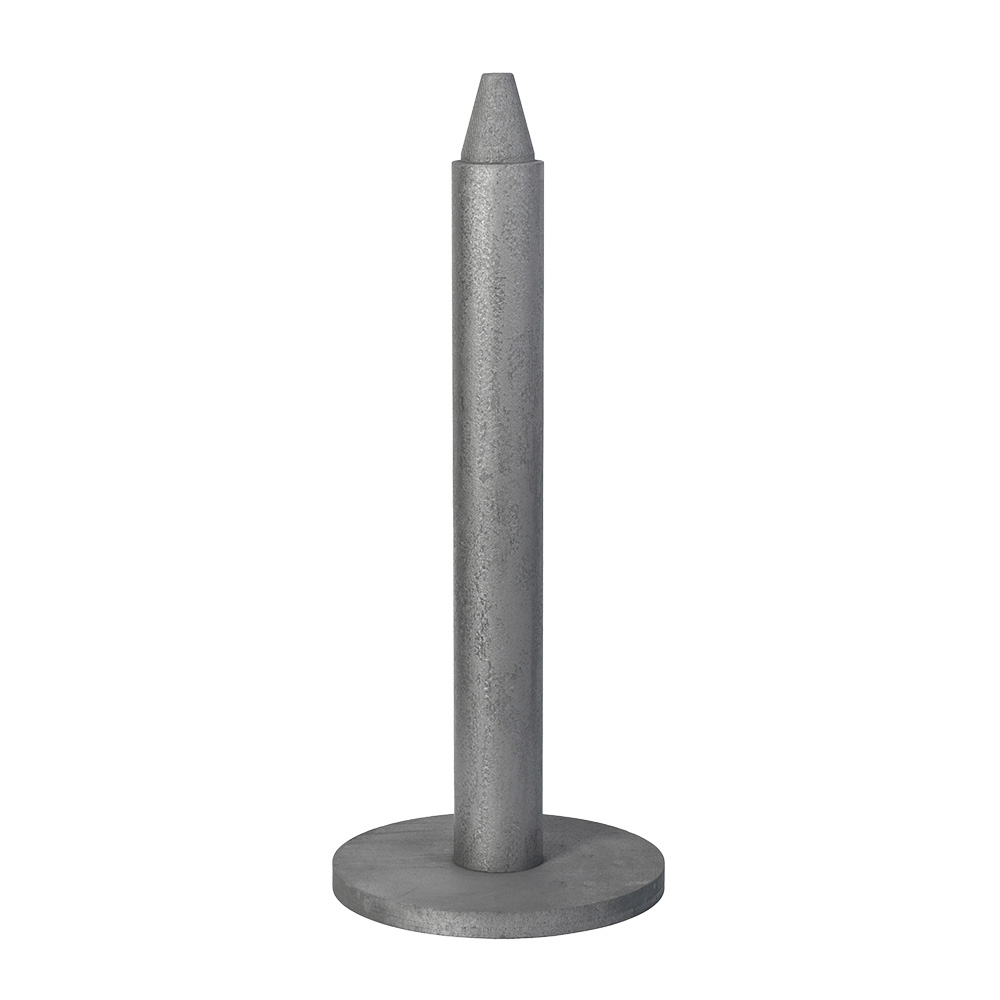
Dehong's Carbon-Carbon Support Rod is designed for use as an inner support rod in single-crystal furnaces. Its manufacturing process involves nonwoven fabrics, woven fabrics, and fiber mats, combined with needle-punching technology to prepare the reinforcement structure. The preform then undergoes integrated gas-phase infiltration and liquid-phase impregnation for densification, helping develop the required mechanical strength and material consistency.
The company's manufacturing capabilities also support custom development for non-standard furnace components. Material structure, component geometry, load requirements, and machining details can be considered during product development. For customers sourcing support rods for existing equipment or new furnace designs, drawing-based evaluation and specification confirmation help ensure compatibility with the intended application.
Conclusion
Carbon-carbon support rods are a practical option for single-crystal growth furnaces where mechanical strength, low weight, thermal stability, and resistance to thermal shock must be considered together. Their fiber-reinforced structure offers design flexibility for different loading requirements, while manufacturing quality and precision machining play a major role in the performance of the finished component.
Selecting the right support rod requires a clear understanding of furnace operating conditions, component loads, thermal environment, and installation requirements. By matching material properties with actual application needs, equipment manufacturers and end users can make better decisions about component selection, maintenance, and replacement.
For application-specific requirements, visit Dehong's Carbon-Carbon Support Rod product page to review product details or discuss customized dimensions and technical specifications.
