Vacuum furnaces run clean, high-temperature cycles for heat treatment, brazing, sintering, and advanced material processing. Inside the hot zone, every component has to carry load, hold its shape, and survive thousands of rapid heating and cooling cycles. Dehong's carbon-carbon (C/C) composite parts are made for exactly that environment, and they are widely used to refurbish or upgrade hot zones that were originally built with graphite or metal.
The same fiber architecture and densification know-how also supports our photovoltaic thermal field and semiconductor ranges, so vacuum furnace customers benefit from process control proven in some of the most demanding crystal growth equipment. For parts with a custom shape, we can start from our own preforms.
Hardening, annealing, tempering, and aging of tool steels, alloys, and precision parts.
Clean, oxide-free joining of stainless steel, aerospace, and heat-exchanger assemblies.
Powder metallurgy, cemented carbide, and technical ceramics that need a controlled atmosphere.
Relining and upgrading existing furnaces, often with insulation hard felt and C/C plates.
High strength with no creep. Parts keep their shape under load at temperature, so plates, rods, and fasteners do not sag or loosen over time.
Thermal shock resistance. Fiber reinforcement lets C/C tolerate fast ramps and gas quenching better than brittle graphite.
Low density, low thermal mass. Lighter fixtures and supports heat up and cool down faster, which can shorten cycles and reduce energy use.
Low thermal expansion. Stable dimensions keep the hot zone aligned from the first cycle to the thousandth.
Engineered fiber layout. 2D, 2.5D, and 3D architectures can be matched to each part's loading mode, from plates to support rods.
Long service life. Fewer replacements mean less furnace downtime and a lower cost per cycle over the life of the hot zone.
The diagram below is a simplified cross-section of a typical vacuum furnace. The numbers match the components listed beside it, from the outer vessel to the support structure that carries the load.
Vacuum vessel. The sealed outer shell holds the vacuum or process gas. The C/C lining inside keeps heat away from it.
Insulation hard felt. It limits heat loss, keeps the chamber temperature uniform, and protects the vessel wall.
Protection plates and cover plates. They form the inner lining, shielding the felt from gas flow, abrasion, and mechanical damage.
Heating elements. They turn electrical power into radiant heat and set how evenly the workload is heated.
Fasteners. C/C bolts and nuts hold the lining together without the creep and loosening seen in metal fixings at temperature.
Furnace base and support rods. They carry the load and keep the workpieces centered in the heating zone.
Zhejiang Dehong Carbon Fiber Composite Material Co., Ltd. was founded in December 2021 in the China-Singapore Industrial Park, Jiashan County, Jiaxing City. Our core team has worked in the carbon-carbon composite industry for more than ten years and has developed its own processes, equipment, and production lines.
Three divisions work under one roof: carbon/carbon composite, thermal insulation material, and graphite processing. That means a vacuum furnace customer can source heaters, plates, fasteners, and felt from one supplier and one quality system. We also work with universities including Wuhan Textile University, Tianjin University of Technology, and Beihang University on weaving and densification research.
Read our company profile, meet the engineering team, or review our intellectual property.
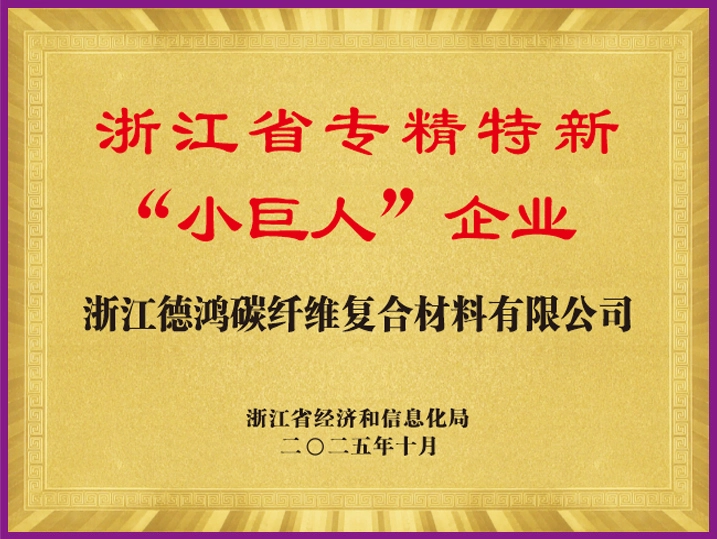
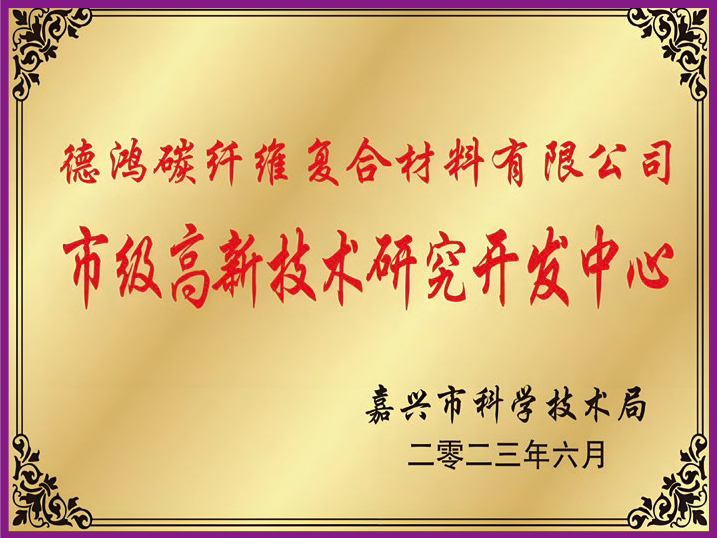
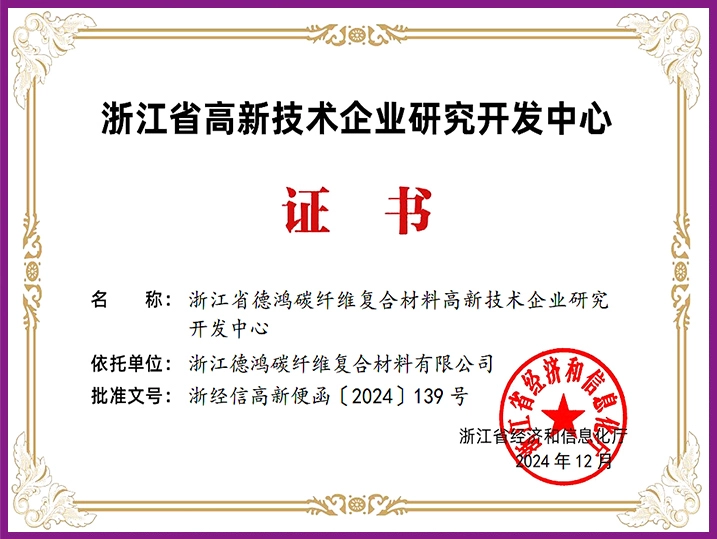
Government recognition of our materials, technology centers, and growth. The four honors below are a selection from our full list of corporate honors.
These are the questions furnace operators and heat-treat shops ask most often when they consider moving from graphite or metal parts to carbon-carbon.
Graphite is brittle and metals creep and distort at temperature. C/C composite combines low density with fiber-reinforced strength, so parts resist thermal shock, hold their shape, and last through more cycles. The right choice still depends on your process, so share your temperature, load, and atmosphere with us.
Usually yes. Send us your drawings or existing part samples and we will match the dimensions, mounting holes, and fiber architecture. Common retrofits include cover plates, fasteners, and insulation felt.
Carbon performs best in vacuum or inert gas. In air or other oxygen-containing atmospheres at high temperature, carbon oxidizes, so C/C parts are not suited to those conditions without protective measures.
Carbon is a standard hot zone material and works well for most processes. Some carbon-sensitive materials can pick up carbon at temperature, so we recommend reviewing your process with our engineers before you switch. We control ash content and metallic impurities during production.
Lead time depends on part complexity and volume. Standard sizes ship faster, while fully custom geometries need prototype validation first. We confirm a specific schedule once we have reviewed your drawings.
Yes. Material certificates, dimensional inspection reports, and chemical analysis results are available on request. Contact our team to request a documentation package or a quote.