
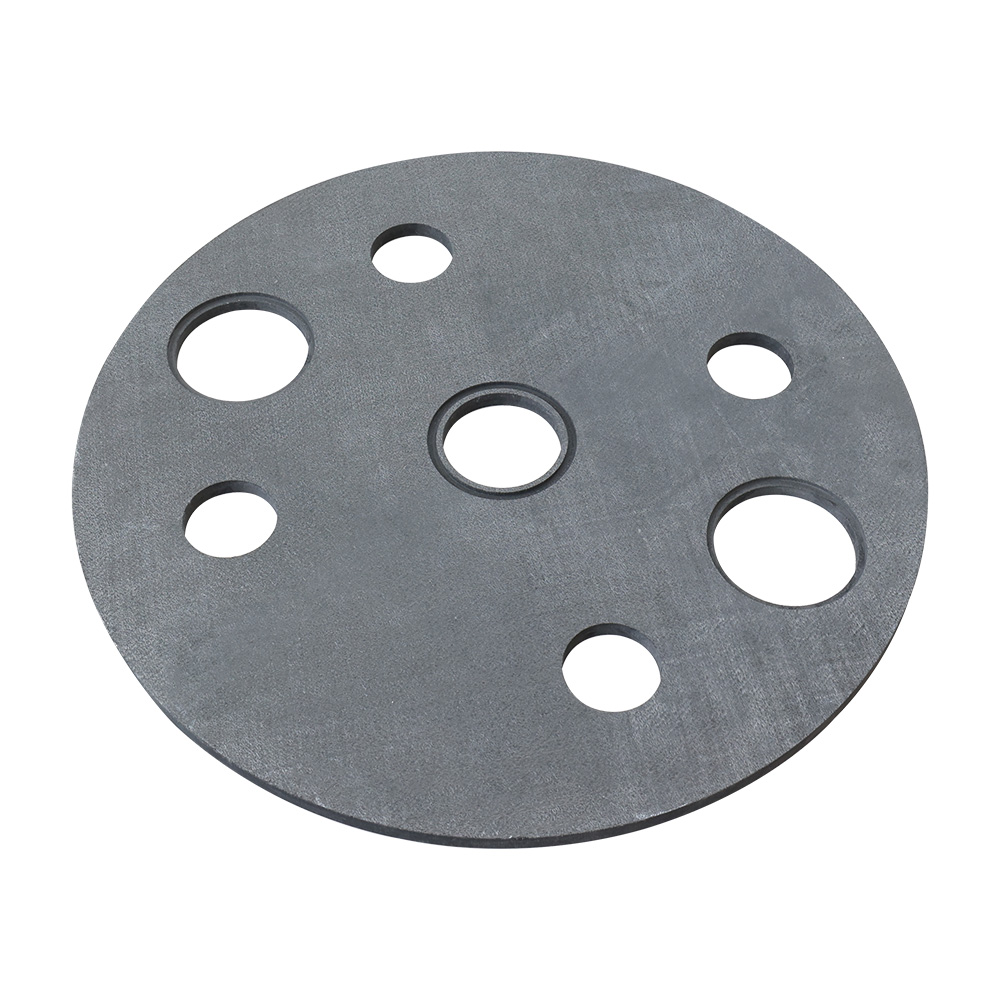
Carbon-carbon furnace bases are used in high-temperature processing equipment where structural strength, dimensional stability, and heat resistance are essential. In vacuum furnaces and crystal growth systems, they must support workpieces and fixtures while withstanding prolonged exposure to high temperatures and repeated heating and cooling cycles. Their ability to maintain structural integrity under these conditions directly affects furnace reliability and process consistency.
High-temperature load-bearing performance depends on more than the material itself. Fiber architecture, base thickness, support layout, manufacturing quality, and operating conditions all influence how a furnace base performs under load. Understanding these factors helps engineers select and design carbon-carbon furnace bases that meet the demands of their specific furnace systems.
What Causes Load-Bearing Instability in High-Temperature Furnaces?
During furnace operation, the base carries the weight of workpieces, fixtures, and other components while experiencing thermal expansion and contraction. Uneven loading can create localized stress, particularly when heavy workpieces are placed over unsupported areas. Depending on the structure and operating conditions, this may lead to excessive deflection, cracking, or dimensional changes.
Temperature gradients present another challenge. When different areas of the base heat or cool at different rates, uneven thermal expansion can generate internal stress. Repeated thermal cycles may further affect structural integrity, especially when loading conditions or heating and cooling rates are not properly controlled. For this reason, a carbon-carbon furnace base should be evaluated under actual operating conditions rather than selected solely by its maximum temperature rating.
Material Structure and Fiber Architecture: The Foundation of Stability
Carbon-carbon composites consist of carbon fibers reinforced by a carbon matrix. Their combination of mechanical strength, relatively low weight, and thermal shock resistance makes them suitable for structural components used in demanding furnace environments. Compared with conventional graphite components, C/C composites can offer advantages in applications where load-bearing performance and resistance to thermal cycling are both required.
Fiber architecture plays a major role in determining how the material responds to mechanical loads. The orientation and distribution of fibers affect load transfer, bending resistance, and structural performance in different directions. Woven fabrics, nonwoven reinforcements, fiber mats, and other preform structures can be used depending on the component's design and application.
For a load-bearing furnace base, the reinforcement structure needs to match the expected stress conditions. A component exposed primarily to bending may require a different fiber arrangement from one subjected mainly to compression or distributed loads. Choosing the appropriate reinforcement design helps make better use of the composite's mechanical properties and reduces the risk of structural weaknesses.
Structural Design Strategies for Better Load-Bearing Performance
The geometry of a carbon-carbon furnace base has a direct influence on its stiffness, weight, and ability to support workpieces. Thickness, overall dimensions, unsupported span, and support locations need to be evaluated together. Increasing thickness may improve stiffness and reduce deflection in certain configurations, but it also adds weight and may affect thermal response. The goal is to find a structure that meets the load requirements without unnecessary material use.
Load distribution is equally important. Even when the total weight remains within the base's design capacity, concentrating it in a small area can create excessive local stress. Properly positioned support points, balanced workpiece placement, and suitable fixture arrangements help distribute loads more evenly and reduce the risk of localized deformation. Large furnace bases require particular attention to unsupported sections and the relationship between the load positions and the reinforcement structure.
Fiber orientation can also be tailored to the main loading direction. Different arrangements may be required to accommodate bending, compression, or combined stresses. By considering the load path during the design stage, manufacturers can develop carbon-carbon furnace bases with structures better suited to specific furnace configurations and operating conditions.
How Manufacturing Quality Influences Furnace Base Stability
A well-designed carbon-carbon furnace base still depends on consistent manufacturing quality to achieve reliable performance. Fiber distribution, preform integrity, densification, machining accuracy, and final inspection all affect the finished component. Variations in internal structure or density can lead to differences in mechanical performance, while dimensional inaccuracies may cause poor contact with supporting structures and uneven loading during installation.
Densification is a critical step in carbon-carbon composite manufacturing. Processes such as chemical vapor infiltration (CVI) and liquid impregnation introduce carbon into the reinforcement structure, helping increase material density and develop the required composite properties. The final performance depends on the material system, process route, and production controls, making consistency throughout manufacturing particularly important.
Precision machining also affects how the furnace base fits into the equipment. Flatness, thickness, mounting features, and contact surfaces need to meet the requirements of the furnace design. Uneven contact or misaligned supports can introduce additional stress once the component is installed. Checking dimensions and surface accuracy before installation helps prevent avoidable loading issues.
Operating Conditions That Help Prevent Deformation
Proper operating practices can help maintain the structural stability of carbon-carbon furnace bases over time. Workpiece weight, fixture weight, loading position, heating rate, cooling conditions, and furnace atmosphere all need to be considered when establishing operating procedures. A base designed for one load arrangement may behave differently if the workpieces are repositioned or the unsupported span changes.
Avoiding concentrated loads is one of the simplest ways to reduce mechanical stress. Workpieces should be placed according to the base's structural design, with adequate support for heavy or long components. When loading conditions change significantly, the new arrangement should be evaluated before use. Controlled heating and cooling can also help limit thermal gradients, particularly in processes involving frequent temperature changes.
Carbon-carbon composites are commonly used in vacuum and inert-gas environments, but exposure to oxygen at elevated temperatures can cause oxidation. Furnace atmosphere, operating temperature, and exposure duration therefore have a direct bearing on material degradation and service life. Maintaining suitable protective conditions is essential to prevent premature deterioration.
Carbon-Carbon Furnace Bases in Vacuum and Crystal Growth Systems
Carbon-carbon furnace bases are used in high-temperature equipment that requires reliable structural support. In vacuum heat treatment systems, they can support workpieces and fixtures during processes such as hardening, annealing, tempering, and other thermal treatments. Their strength-to-weight characteristics are particularly useful when the supporting structure needs to handle substantial loads without adding excessive weight to the furnace assembly.
Crystal growth equipment also relies on stable support components to maintain the arrangement of thermal field assemblies. Dimensional changes or movement within the hot zone may affect component alignment and the surrounding structure. Depending on the furnace design, carbon-carbon furnace bases may work alongside support rods, plates, fasteners, and insulation components as part of an integrated thermal field system.
Selecting a suitable base requires more than checking its temperature resistance. Load capacity, furnace dimensions, support locations, atmosphere, thermal cycling, and compatibility with surrounding components all need to be considered. These factors determine whether the material and structure can meet the demands of a particular furnace application.
What Should Buyers Consider When Selecting a Carbon-Carbon Furnace Base?
For furnace manufacturers and industrial buyers, selection starts with defining the operating conditions. Maximum working temperature, total load, load distribution, furnace atmosphere, heating and cooling cycles, and installation dimensions provide the basis for evaluating a suitable carbon-carbon furnace base. Material density and mechanical properties should then be assessed against these requirements.
Standard dimensions may work for some furnace systems, while others require custom machining or structural modifications. Customized furnace bases may involve specific thicknesses, mounting holes, support positions, geometries, or reinforcement arrangements. Providing technical drawings, component samples, or detailed operating parameters helps manufacturers evaluate feasibility and recommend a suitable design.
Quality documentation is also worth reviewing before purchase. Depending on the application, buyers may request dimensional inspection records, material property data, density information, and other relevant documentation to verify that the component meets their technical requirements.
Conclusion
Load-bearing stability at high temperatures depends on the interaction between material properties, fiber architecture, structural design, manufacturing quality, and operating conditions. Optimized thickness and geometry, properly arranged supports, balanced loading, accurate machining, and controlled thermal conditions all contribute to the reliable performance of carbon-carbon furnace bases.
The most suitable furnace base is not necessarily the one with the highest material strength, but the one designed around the actual load, thermal environment, installation requirements, and operating cycles of the furnace. Taking these factors into account during material selection and structural design can help reduce deformation risks, improve component reliability, and maintain consistent furnace performance over the long term.
