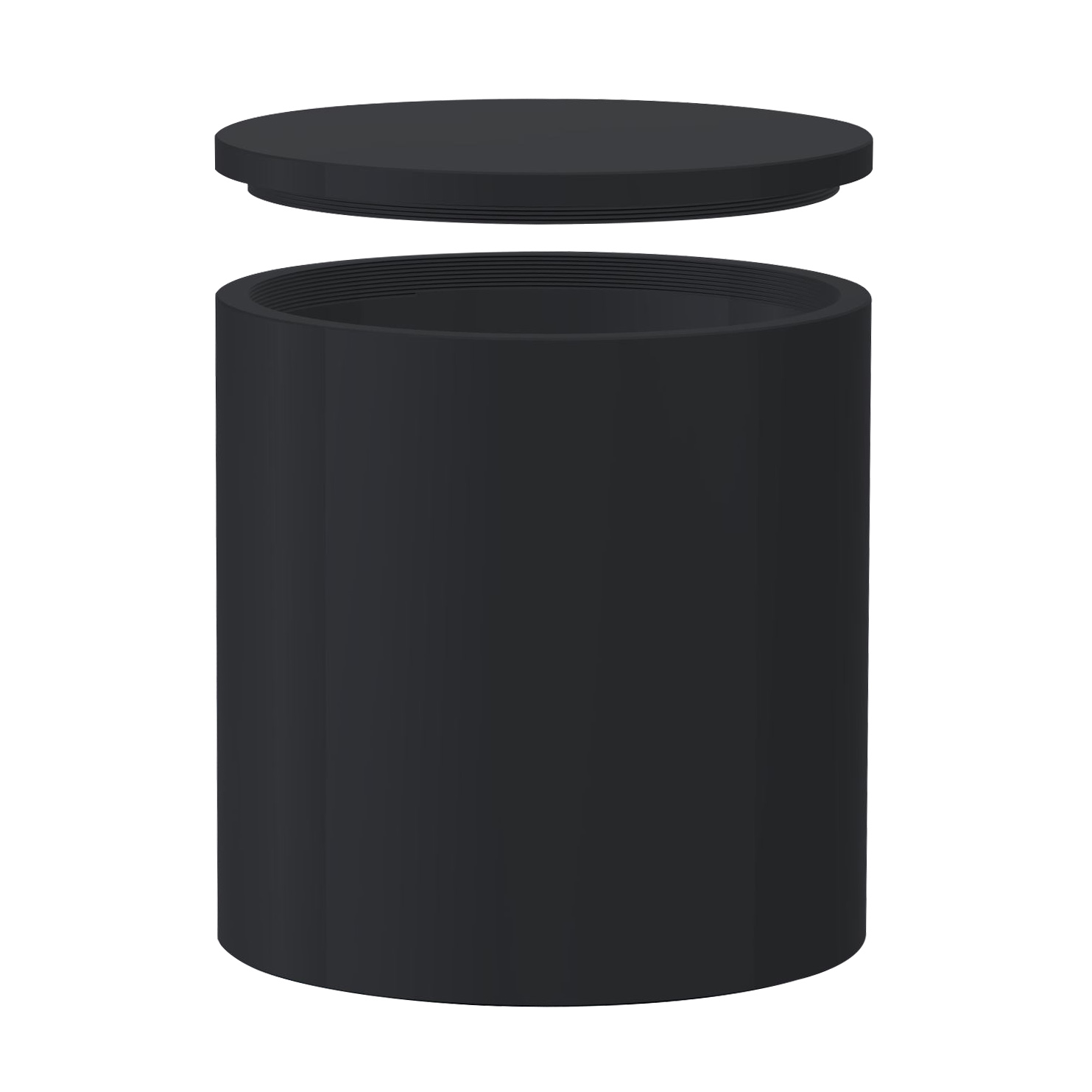
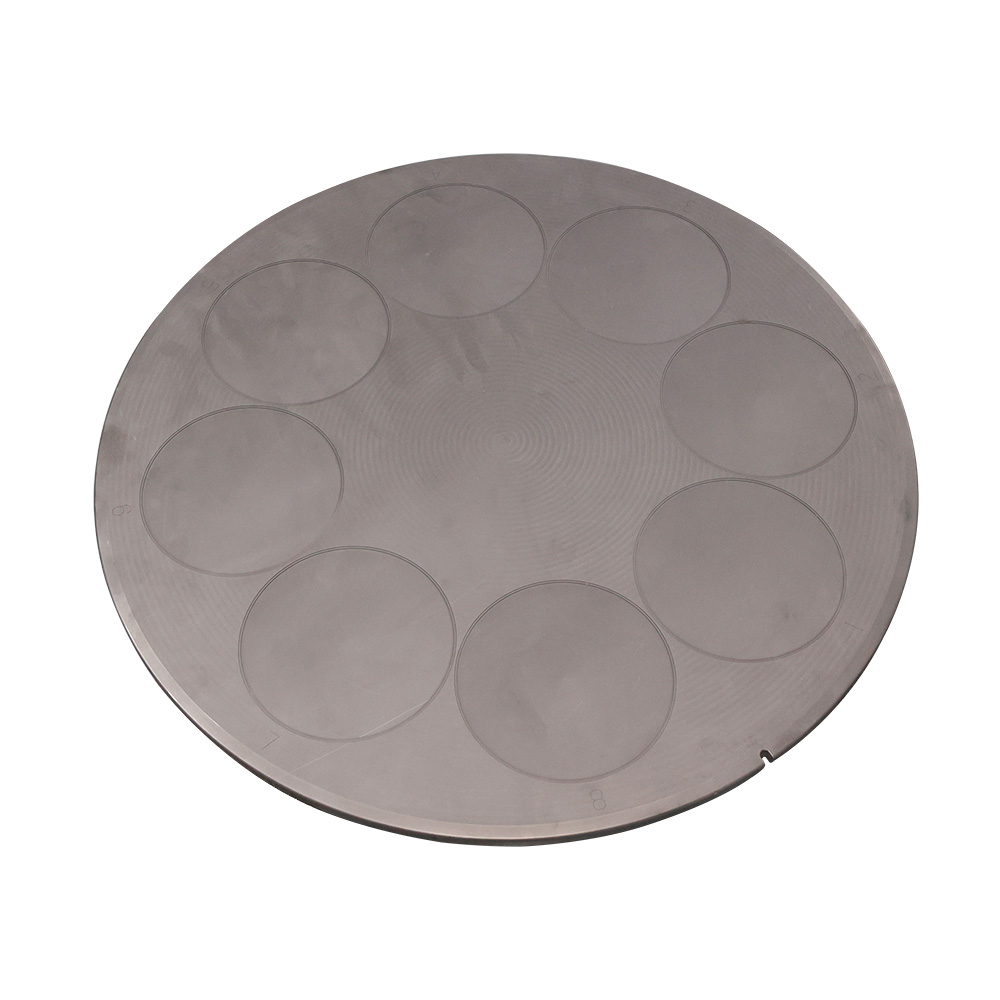
Graphite crucibles and graphite epitaxial wafers sit at the core of the crystal growth furnace, holding melt purity, thermal uniformity, and dimensional stability through thousands of hours at temperature. The application range spans several high-precision crystal growth processes, and the performance gap against general-purpose graphite parts is what keeps these components specified by design.
Graphite crucibles hold SiC, GaAs and GaN source material through the growth run, keeping the axial gradient that governs crystal polytype and quality.
Crucibles contain molten silicon above 1500°C for the full pulling cycle without creeping, cracking, or contaminating the melt.
Graphite epitaxial wafers serve as flat, thermally stable susceptors for uniform thin-film deposition during epitaxial growth.
Crucibles support directional solidification and ingot pulling for photovoltaic-grade silicon, where melt purity affects cell efficiency.
Withstands extreme, stable heat for sapphire and other specialty single-crystal growth where thermal shock resistance is critical.
Custom crucible and wafer sizes support pilot-scale and research furnace runs ahead of full production tooling.
Structural integrity maintained up to 3000°C without deformation · high thermal conductivity gives even heat distribution across the melt or wafer surface · low thermal expansion keeps geometry fixed through repeated thermal cycling · strong resistance to oxidation and corrosion in aggressive furnace atmospheres · consistent purity from run to run protects sensitive crystal growth chemistry.
Machined from Dehong's own premium-grade graphite stock rather than resold third-party material, which keeps ash content and metallic impurities within tight limits for purity-sensitive crystal growth · crucible capacity and wafer diameter are matched to the customer's furnace drawing rather than sold off a fixed catalog size · factory-direct supply keeps lead time and pricing competitive at production volume.
Graphite crucibles and graphite epitaxial wafers are not a standalone product line — they share the same materials and precision-machining foundation that Dehong has refined for a decade across every category on the product range, from crucible holders to furnace heaters. That shared engineering base is what keeps crystal growth performance consistent furnace after furnace.
The same disciplined production flow used across Dehong's C/C component range is applied to graphite crucibles and epitaxial wafers, with process parameters tuned for melt purity, surface flatness, and thermal stability rather than general structural load.
Premium-grade graphite stock is screened for density and impurity level before machining.
Diamond tooling shapes crucible bores and wafer blanks to target dimensions.
Heat treatment drives off residual impurities and stabilizes the graphite structure.
Polishing brings wafer flatness and crucible bore finish within spec for uniform deposition and melt contact.
Ash content, metallic impurities, and dimensional tolerance are verified against the specified grade.
Each batch is confirmed against the customer's furnace drawing before shipment.
A graphite crucible is a container that holds molten source material during crystal growth, built to resist thermal shock and chemical attack from the melt. A graphite epitaxial wafer is a flat susceptor used downstream in CVD or MOCVD steps, where a smooth, thermally stable surface supports uniform thin-film deposition.
Premium-grade graphite crucibles are designed to maintain structural integrity at temperatures up to 3000°C, which covers the working range of compound semiconductor synthesis, CZ silicon pulling, and most specialty single-crystal growth processes.
Trace metallic contamination from the crucible or wafer can transfer into the melt or deposited film and disrupt crystal structure or electrical performance. Purity control at the graphite stage is treated as a core process step rather than an afterthought for this reason.
Yes. Crucible capacity, wall thickness, and wafer diameter and thickness are matched to the customer's furnace drawing or existing part dimensions, rather than limited to a fixed catalog size.
Epitaxial wafers are polished to a smooth, highly flat surface, since even small variations in flatness can cause uneven film thickness during CVD or MOCVD deposition. The required flatness tolerance depends on the specific epitaxial process and film target.
Service life depends on operating temperature, melt chemistry, and cycle frequency, but crucibles are built with resistance to oxidation and corrosion so performance stays consistent across repeated growth runs rather than degrading after a small number of cycles.