Monocrystal Growth Thermal Field Manufacturer

The monocrystal growth thermal field is the heart of any Czochralski-method silicon crystal puller. Every component within this high-temperature enclosure must simultaneously withstand extreme thermal loads, resist chemical attack from silicon melt environments, maintain dimensional stability across thousands of heating cycles, and introduce zero metallic contamination into the growing crystal. Carbon-carbon (C/C) composite materials — dense, lightweight, and thermally controlled — have become the engineering standard for meeting these demands. Zhejiang Dehong Carbon Fiber Composite Materials Co., Ltd., headquartered in Jiashan County, Jiaxing City, Zhejiang Province, specializes in the design and custom manufacture of a full suite of single-crystal furnace components built entirely from high-performance C/C composites. The five core products — the Carbon Carbon Support Ring, the Carbon Carbon Support Rod, the Carbon Carbon Crucible Holder, the Single Crystal Furnace Heater, and the Carbon Carbon Furnace Base Tray — function as an integrated thermal field system, not isolated parts.

Why Carbon-Carbon Composites Define Modern Thermal Field Engineering

Carbon-carbon composites derive their exceptional performance from a carbon fiber preform that is densified by one or both of two principal methods: chemical vapor infiltration (CVI), where a hydrocarbon precursor gas decomposes at elevated temperature to deposit pyrolytic carbon within the fiber network, and liquid-phase impregnation, where a carbon-yielding resin or pitch is introduced under pressure and then carbonized at high temperature. Multiple impregnation and carbonization cycles build density incrementally until the target bulk density is achieved. A final graphitization step — conducted above 2000 °C — reorganizes the carbon microstructure, reduces residual ash to ≤200 ppm, lowers resistivity, and adjusts thermal conductivity to the values required for each specific component function.

This manufacturing architecture produces a material that is lighter than high-density graphite, retains mechanical strength at temperatures where metals lose load-bearing capacity, and offers a coefficient of thermal expansion that closely matches the silicon melt environment — a critical factor in preventing thermally induced stress cracking during the long duration of a single-crystal pull run. The low thermal conductivity in the direction perpendicular to the fiber layers (vertical direction) also acts as passive insulation between adjacent thermal zones within the furnace, reducing energy consumption without requiring additional shielding. Dehong's quality inspection protocols cover every stage from preform fabrication through finished machining, ensuring that representative mechanical and physical properties are consistently reproduced across production batches.

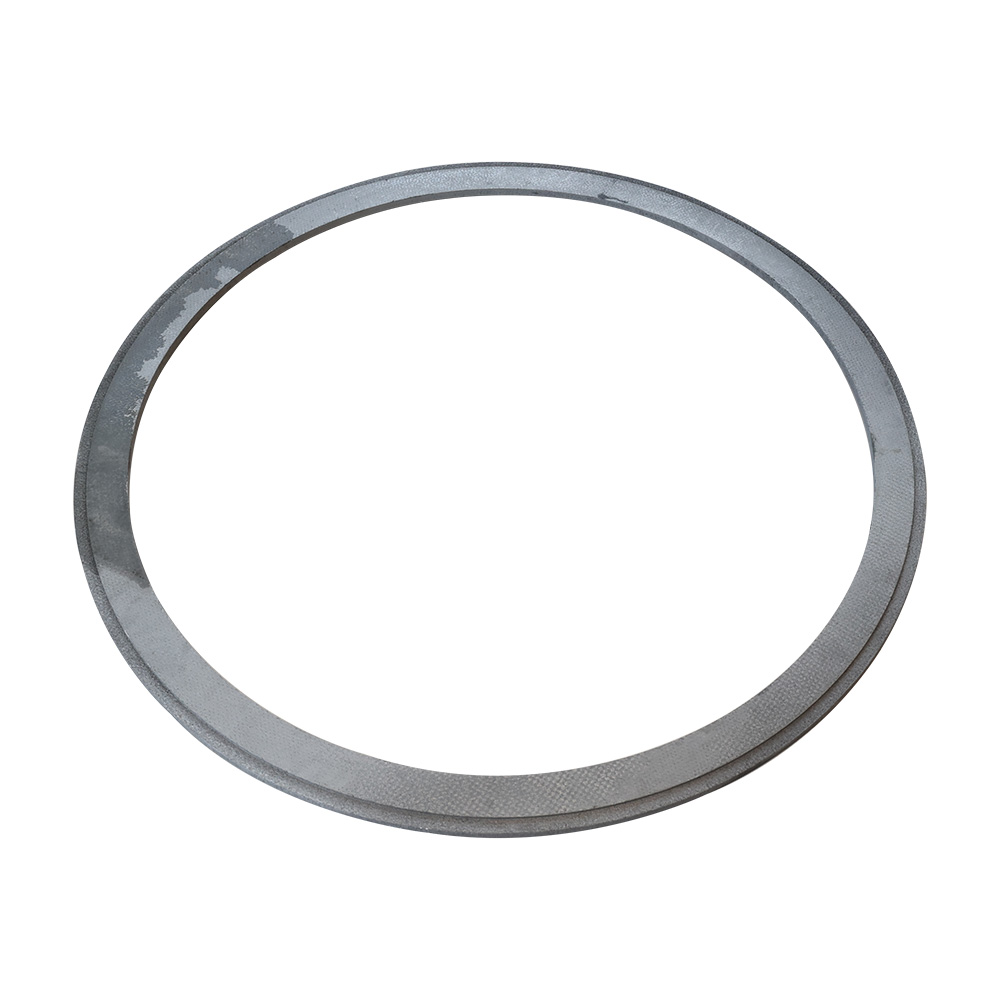
Carbon Carbon Support Ring — Structural Foundation of the Inner Thermal Field

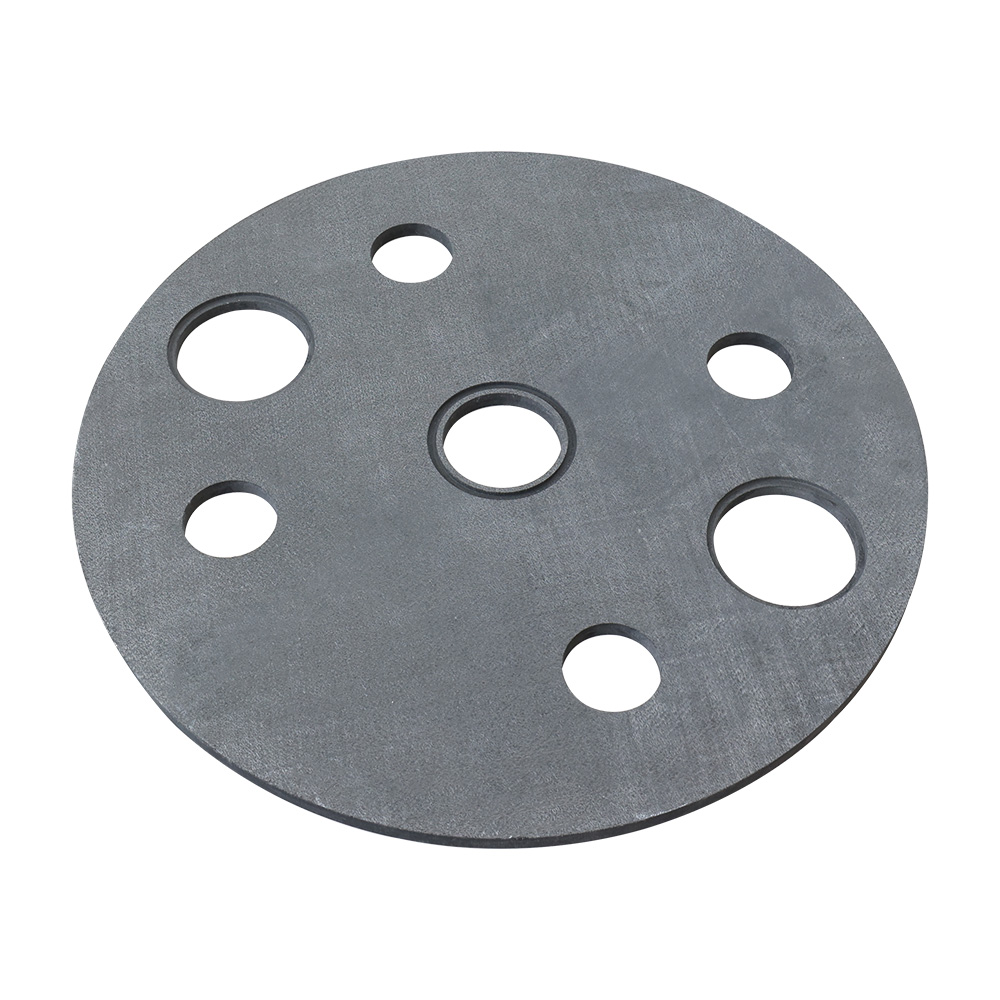
The Carbon Carbon Support Ring, produced in an annular plate configuration, serves as both the inner support structure and the chassis protection layer within the single-crystal furnace chamber. It is manufactured by laminating non-woven and woven carbon fiber fabrics together with needle-punching technology, then densifying the preform through a combined CVI and liquid-phase impregnation process. The resulting plate achieves a bulk density of 1.4 g/cm³, a bending strength of 125 MPa, a tensile strength of 160 MPa, a compressive strength of 130 MPa, and an interlayer shear strength of 25 MPa. Thermal conductivity in the vertical direction is 7.5 W/m·K, and maximum part diameter reaches 2000 mm, accommodating the largest commercial-scale Czochralski furnaces currently in production.

The slow thermal conductivity of the ring limits radial heat loss from the melt zone outward toward the furnace wall, preserving the axisymmetric temperature gradient that governs crystal perfection. The graphitization temperature of ≥2000 °C means ash content stays at or below 200 ppm — a purity level that prevents any metallic impurity transfer to the silicon crystal that would degrade its electrical resistivity and minority carrier lifetime. The short production cycle and long service life of this component translate directly into reduced downtime and lower cost-per-wafer for photovoltaic and semiconductor customers. Dehong's Czochralski support rings are part of a broader photovoltaic field product portfolio that covers monocrystalline as well as multi-crystalline furnace applications.

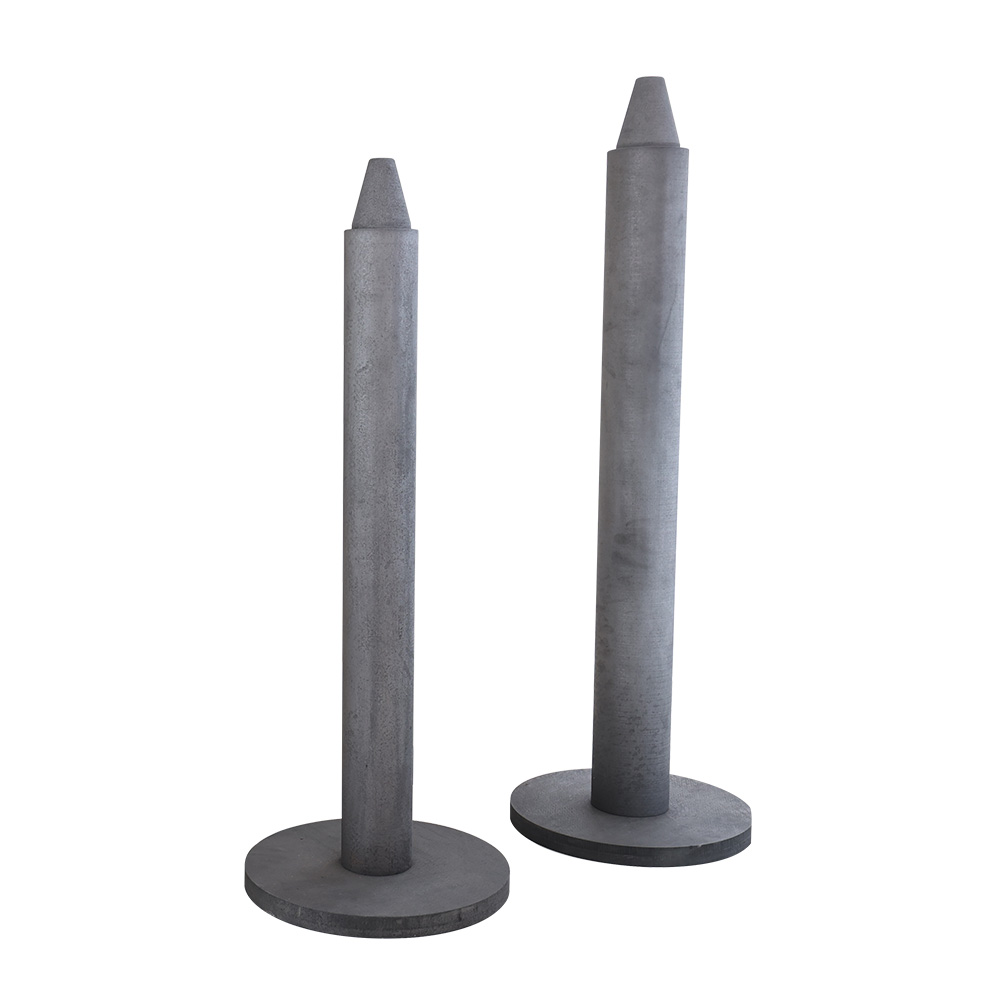
Carbon Carbon Support Rod — Lightweight Structural Backbone Inside the Puller

The Carbon Carbon Support Rod functions as the inner vertical support element connecting the load-bearing structure of the thermal field from the base upward. Its manufacturing route starts with a preform blank fabricated by winding and laying non-woven and woven fiber mats with needle-punching integration, followed by combined gas-phase infiltration and liquid-phase impregnation densification, a high-temperature graphitization treatment, and precision machining to final geometry. The finished rod has a density of 1.3 g/cm³, a bending strength of 90 MPa, tensile strength of 130 MPa, compressive strength of 120 MPa, interlayer shear strength of 25 MPa, and a vertical thermal conductivity of 6 W/m·K. Maximum length is 1400 mm.

The specific manufacturing geometry — winding rather than flat lamination — optimizes the fiber orientation for axial load-bearing and bending resistance, which is the primary stress mode experienced by a support rod during thermal cycling. The component's relatively low density compared to its graphite counterpart reduces the inertial load on the furnace mechanisms responsible for lifting and rotating the growing crystal, while the low thermal conductivity characteristic suppresses parasitic heat flow along the rod axis toward cooler structural elements. The energy-saving effect from this thermal isolation is measurable in kilowatt-hours over a full production campaign. Quick assembly and disassembly for tooling cleaning — a noted product advantage — minimizes contamination risk between successive crystal growth runs.

Carbon Carbon Crucible Holder — Precision Support for the Quartz Crucible in Puller Furnaces

The Carbon Carbon Crucible Holder provides the bottom support interface between the rotating carbon susceptor and the quartz crucible containing the silicon charge. It is produced through lamination of non-woven and woven fiber mats with needle-punching, followed by compression molding and shaping, liquid-phase densification, a high-temperature graphitization stage, and finish machining. The component can be custom-produced to match customer-specified crucible dimensions, making it compatible with a broad range of puller furnace configurations. Physical properties include a density of 1.3 g/cm³, bending strength of 100 MPa, tensile strength of 140 MPa, compressive strength of 120 MPa, interlayer shear strength of 20 MPa, and vertical thermal conductivity of 6 W/m·K. Maximum diameter is 1100 mm.

The compression molding step used in this component's production — distinct from purely laminated or wound components — allows the preform to be shaped into the concave or stepped geometry required to seat a crucible precisely, minimizing lateral play that could introduce vibration into the growing crystal interface. Excellent ablation resistance and strong corrosion resistance are functionally critical here because the holder operates in close proximity to the silicon melt, where silica vapor from the quartz crucible wall creates a mildly oxidizing and chemically reactive local atmosphere. The ≤200 ppm ash content again enforces purity standards that semiconductor-grade silicon production demands. This component is also applicable in compound semiconductor puller furnaces covered within Dehong's semiconductor field product range.

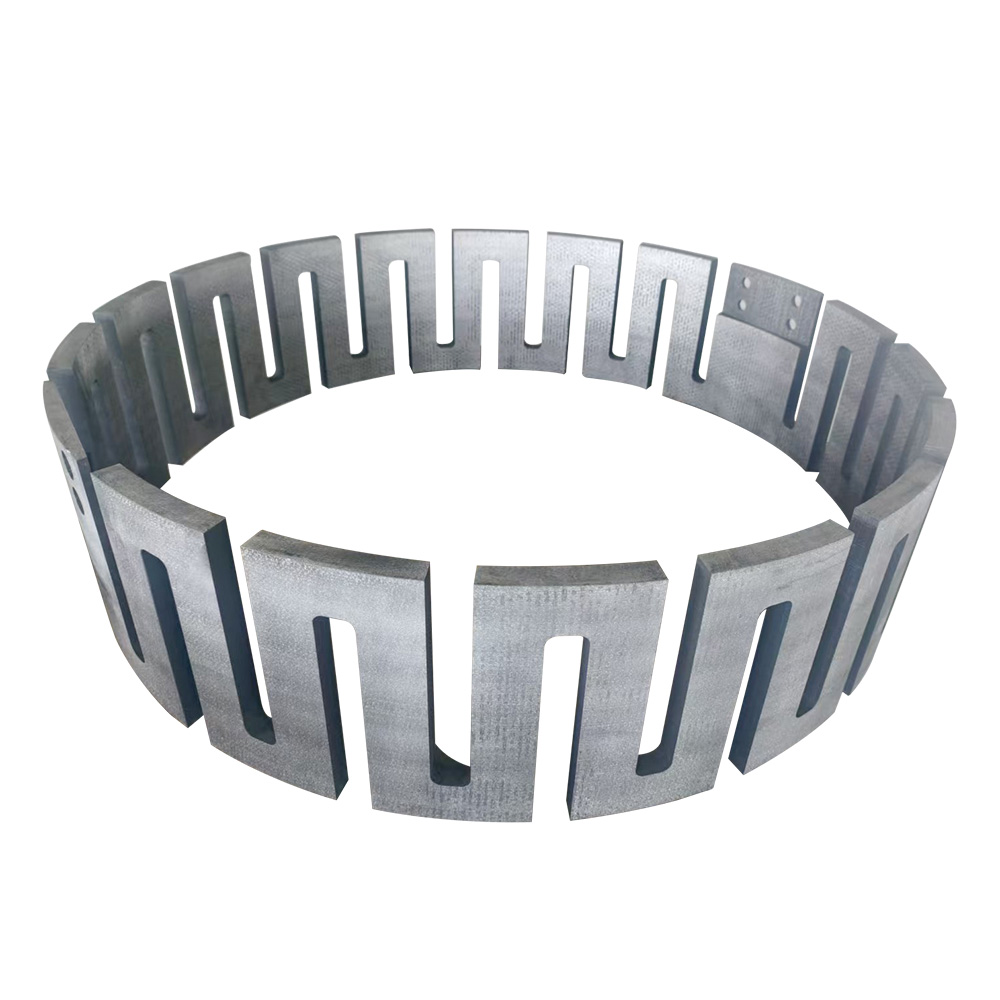
Single Crystal Furnace Heater — The High-Resistance Thermal Source of the Growth Zone

The Single Crystal Furnace Heater, designated as the main heater in the thermal field, is a barrel-shaped resistive heating element machined from a C/C composite body. It is fabricated by winding and laying non-woven and woven fiber mats with needle-punching integration, then densifying through combined gas-phase infiltration and liquid-phase impregnation before final machining. The heater achieves the highest density in the thermal field component set at 1.5 g/cm³, with a bending strength of 140 MPa, tensile strength of 160 MPa, compressive strength of 135 MPa, interlayer shear strength of 20 MPa, and a measured resistivity of 20 µΩ·m — the only component in the group with a specified electrical property because it must function as a controlled-resistance heating element. Vertical thermal conductivity is 8 W/m·K, maximum diameter is 1500 mm, and ash content remains ≤200 ppm.

The resistivity of 20 µΩ·m determines the power density delivered per unit surface area at a given drive current, directly governing how uniformly the silicon charge is heated toward and above the 1414 °C melting point of silicon. A heater with excessively high or low resistivity relative to the power supply design creates localized hot spots or requires operating at sub-optimal currents, both of which distort the axial temperature gradient and increase the density of crystal defects such as dislocations and oxygen striations. The high bending strength of 140 MPa is essential because the barrel geometry must resist mechanical distortion from thermal gradients across the wall thickness during power ramp cycles. Excellent ablation resistance extends service life in the reactive high-temperature atmosphere. This heater is equally specified for high-temperature heat treatment applications in Dehong's vacuum furnace field product lines.

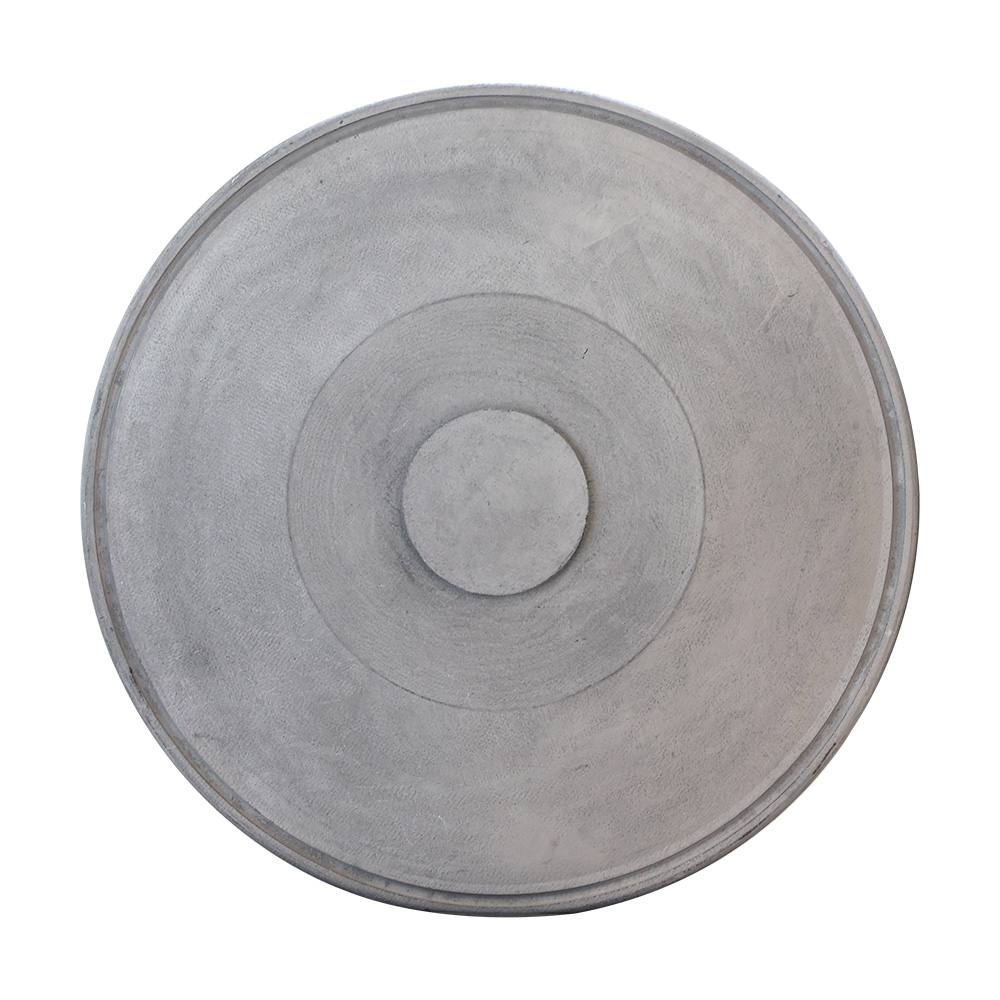
Carbon Carbon Furnace Base Tray — High-Strength Load-Bearing Foundation and Chassis Protection

The Carbon Carbon Furnace Base Tray is the bottommost structural element of the thermal field assembly, providing both mechanical load distribution and chassis protection for the inner chamber. It is manufactured by the same combined CVI and liquid impregnation process used for the Support Ring, with the same laminated fiber mat architecture. The Furnace Base Tray exhibits the highest bending strength (180 MPa), tensile strength (165 MPa), compressive strength (140 MPa), and thermal conductivity (8.5 W/m·K) in the entire component family, along with a density of 1.5 g/cm³, resistivity of 18 µΩ·m, interlayer shear strength of 20 MPa, and a maximum diameter of 2000 mm. Ash content is maintained at ≤200 ppm and graphitization temperature is ≥2000 °C.

The superior mechanical strength figures reflect the functional reality that the base tray bears the cumulative deadweight of the crucible assembly, silicon charge, molten silicon, and thermal field structural components above it — a combined load that can exceed several hundred kilograms in large-diameter furnaces. The relatively high thermal conductivity value (8.5 W/m·K compared to 6–8 W/m·K for other components) is by design, facilitating controlled downward heat extraction from the lower furnace zone that contributes to the axial temperature gradient favoring solid-state crystal propagation upward into the melt. The long service life and short production cycle of this plate type reduce inventory pressure for high-volume photovoltaic wafer producers operating large furnace fleets continuously.

Manufacturing Process, Quality Control, and Customization Capability

Every component in the monocrystal growth thermal field line passes through a structured production sequence that begins with preform blank fabrication — whether by flat lamination, winding, or compression molding — progresses through one or more densification stages (CVI, liquid-phase impregnation, or both), then undergoes graphitization above 2000 °C and precision CNC machining to final dimensional tolerances. The ash content threshold of ≤200 ppm is verified for each production batch through analytical testing, as is dimensional accuracy for critical fit surfaces such as crucible-seating interfaces and furnace-base mating surfaces.

Dehong provides custom geometry across all five product categories. Support ring and base tray diameters scale up to 2000 mm; support rod length reaches 1400 mm; crucible holder diameter accommodates up to 1100 mm; and heater diameter spans up to 1500 mm. Custom-production capability is explicitly available for the crucible holder to match customer-specified crucible geometry, and the same flexibility extends to the other components where furnace model or generation-specific tooling dimensions vary. Dehong's engineering team, detailed on the company profile page, supports customers in component selection, dimensional specification, and thermal field system integration. Information on Dehong's intellectual property portfolio and technical team qualifications is available on the ability page.

Physical Properties Comparative Overview

The five components span a density range of 1.3–1.5 g/cm³, a bending strength range of 90–180 MPa, and a vertical thermal conductivity range of 6–8.5 W/m·K. The lower-density, lower-conductivity support rod and crucible holder minimize inertial and parasitic thermal loads in their roles, while the denser, stronger base tray and heater are engineered for structural duty and resistive heating function respectively. The support ring occupies a middle position in all parameters, balancing structural contribution with thermal insulation. Resistivity is specified only for the heater (20 µΩ·m) and base tray (18 µΩ·m), the two components where electrical properties are functionally relevant. All five share the same graphitization temperature threshold (≥2000 °C) and the same ash content ceiling (≤200 ppm), ensuring uniform purity standards across the entire thermal field assembly and eliminating the risk of differential contamination from different component grades within a single furnace run.

Industry Applications and Target Markets

The primary application domain for Dehong's monocrystal growth thermal field components is the manufacture of Czochralski-method monocrystalline silicon ingots for photovoltaic wafer production and semiconductor device fabrication. The photovoltaic industry, which converts silicon ingots into solar wafers for solar cells and modules, is the largest-volume consumer of single-crystal furnace components globally and represents the core customer base within Dehong's photovoltaic field segment. Semiconductor device manufacturers producing integrated circuits, power devices, and RF components require silicon wafers grown to tighter resistivity and defect specifications, placing even more stringent demands on thermal field purity and temperature uniformity — requirements that the ≤200 ppm ash specification directly addresses.

Beyond silicon, the thermal field concept and C/C component engineering principles apply to compound semiconductor crystal growth furnaces — including gallium arsenide, indium phosphide, and silicon carbide Lely or sublimation systems — covered within Dehong's semiconductor field product lines as well as crystal growth furnace applications. High-temperature heat treatment furnaces and sintering systems within the vacuum furnace field also utilize main heaters and base components that share the same material architecture. Research institutions and pilot-scale crystal growth facilities represent an additional customer segment benefiting from Dehong's custom-production flexibility for non-standard furnace dimensions.

Customers seeking background on how C/C composite materials function across the broader photovoltaic equipment landscape, including components for multi-crystalline casting furnaces, will find additional context within the multi-crystalline furnace product category. For electrode and structural applications in lithium-ion battery manufacturing equipment, Dehong's battery field products extend the same carbon-carbon composite platform into thermal processing systems for cathode and anode material sintering. Technical readers interested in preform fabrication methodologies — the foundational step before densification in all C/C composite manufacturing — can explore the preform field section for further detail on fiber architecture and needle-punching process design.

Why Zhejiang Dehong for Monocrystal Growth Thermal Field Components

Zhejiang Dehong Carbon Fiber Composite Materials Co., Ltd. brings together in-house preform fabrication, multi-route densification capability (CVI, liquid-phase impregnation, and combined processes), high-temperature graphitization furnaces, and precision CNC machining under one facility located at No.2222 Xinfeng Road, Weitang Street, Jiashan County, Jiaxing City, Zhejiang Province, China. This vertical integration shortens lead times, maintains process traceability from fiber to finished component, and gives engineers direct control over the property variables — density, conductivity, resistivity, strength, and purity — that determine thermal field performance.

Customers engaged in high-volume photovoltaic production, emerging SiC power device crystal growth, or specialized research crystal pulling are encouraged to contact Dehong's technical team directly to discuss furnace model compatibility, dimensional customization, and batch volume requirements. Industry updates, material technology developments, and application case studies are published regularly in the industry news section, offering ongoing reference material for engineers and procurement professionals evaluating C/C composite thermal field solutions.